Thursday, January 31, 2019

Anticommunism, the old rage in Latin America


Anticommunism, the old rage in Latin America
January 31, 2019
Diego Martín Velázquez Caballero
https://www.semanarioelreto.com/single-post/2019/01/31/Anticomunismo-la-a%C3%B1eja-rabia-hispanoamericana

The Union of Soviet Socialist Republics (USSR) no longer exists; However, in Latin America the political culture seems to have not heard. When Latin American governments and politicians insist on becoming nationalists, soon disqualifications arise where the anticommunist paroxysm radically sprouts. This unreason has been the factor that, throughout the twentieth century, has prevented the consolidation of the State and the Republic; underdevelopment is the obvious consequence. To end the eternal Latin American poverty, in terms of Rhina Roux, it is enough to return their costumes to the Prince.

Anti-communism was accompanied by unbearable US military interventions. The geopolitical capacity of the North American empire has been radical in the conjunctural moments of Latin nationalism. But times have changed, democratization and the market modified the international game; The United States will end up hurting itself if it decides to summon the anticommunist networks of its strategy.

Robert Pastor describes the conflictive cycle of Spanish-American relations as "swirling". Neither learns nor tries to understand the other. The concrete thing is that Yankee interventionism only results in poverty, corruption, emigration, drug trafficking and all the ills of what is now called the "Failed State". These diseases have been infected and spread in the American Union, the advances of these pathologies within American social capital are stratospheric. Samuel Huntington and George Friedman have warned it decades ago, the United States must stop attending to the ayatollahs of hate and religious fundamentalists just as they did when they let go of Edmund Walsh if they do not want to fail as it happened recently with the most extensive of their paralyzes governmental.

Venezuela's populist regime is exhausted, it's true; however, worse is a military intervention and ridiculous an immediate request for elections. Maduro must be helped to complete his government or make general elections at a reasonable, fair and competitive time. To seek a solution like the one in Guatemala in 1954 is to forget how much the world has changed. The anti-communists stayed in 1905. The world can scrupulously observe the following elections and the Bolivarian government must abandon power if the people no longer hold it.

Today there is Russia, an old empire with a geopolitical and military power similar to the United States but with a greater capacity to adapt to the times of globalization. American society knows the Russian power in its own flesh, it is the modern instruments - formal and informal - that allowed the recovery and development of the most significant central state of the Slavic Baltic civilization. The 1962 crisis could be repeated; but, this time, the nuclear warheads and something else would remain. Venezuela is not alone.

Robert Pastor rightly points out that the teleological principles of American foreign policy must change with respect to Latin America. The American Union must extend throughout the continent and the region can share development, democracy and security in a co-responsible and confederate manner. Local anti-communism must be rejected not only because it is anachronistic but also because it is dangerous and abusive. Latin American schizophrenia always results in the benefit of a parasitic and medieval oligarchy. Even though the Catholic Church has ceased to be anti-Communist and Mario Bergoglio himself placed himself in a position similar to that of the Mexican government, the Constantine radicals long for the arrival of the Marines everywhere and in all the countries of the hemisphere. His great technocratic capacity only reaches to produce mentalities like that of Luis Pazos.

Anti-anti-Communism can be a reference of our time. Communism is dead and it is time that anticommunism - and its brothers: Nazism, Judeophobia, clericalism, fascism, etc. - also do it. How else will ideas and politics be renewed in our republics?

Wednesday, January 09, 2019

Puebla, the order although it comes from the center

Puebla, the order although it comes from the center
January 9, 2019


Diego Martín Velázquez Caballero
https://www.semanarioelreto.com/single-post/2019/01/09/Puebla-el-orden-aunque-venga-del-centro?fbclid=IwAR2i6d5ct10xYsLw_jW0gly2jTKJ6B5tpKkkm6WtgPct_GLM4CtfEx4k_RA


One of the main scholars of the elections in Puebla, Dr. Víctor Reynoso (1997), wrote some years ago about the institutional informality that was impelled in the entity in order to achieve control, stability and order for the historical social conflict between conservatives , liberals and progressives. The title that heads this column refers to this academic work that took the meaning of a popular expression regarding the local inability to generate stable governments. Several years later it seems that Puebla is in the same circumstances and with the same people. Order was lost and there are many shared responsibilities.

Puebla is - essentially - conservative and any modernization awakens the monsters of the identity quarrels. Progress and modernity are desirable phenomena; but, not at any cost and, either, in any way. From there, we must see the impulse that led to morenovallismo to power, its actions, conflicts and tragedies. The morenovallismo did not want to be a neoavilacamachismo, it lacked, or it left him, time, means, public work, consensus, legitimacy, violence. You will never know.

Morenovallismo does not constitute the nucleus of the black box of the political system of Puebla. However, the disappearance of the character that represented it is not similar to the figure of Maximino Ávila Camacho, this yes, structuring a series of elements and balances that achieved cohesion and persistence to conserve power in Puebla, as well as reach the national level . Now, avilacamachismo is restructuring itself to survive in the context of the Fourth Transformation.

Morenovallismo, in fact, was imposed on most of the actors and even sought to subdue the avilacamachismo and change the weights. This is the reason why, in their absence, the factions seek to survive and adapt to the circumstances of the regime. However, there is something in both phenomena that coincide with territorial power: its capacity to generate conflicts. In the immediate history of Puebla that was the characteristic of the political group that built the "Pact of Honor and Justice" in the first half of the Mexican XX century. Currently, it seems that this anarchic era emerges with all its strength. The same academic asked Morenovallismo, recently, in reference to the disputed local elections of 2018: "Does that democracy want?"

The local history shows that Puebla maintains a factionalism that produces radical struggles. The avilacamachismo was controlled, and the state also, with three governors emanating from the presidential orbit in the era of the Hegemonic Party outside the entity. Should something similar happen in the contemporary era to find order and peace?

The avilacamachismo can agree with the federal government. The disappearance of the morenovallismo, from this perspective, does not move away the possibility of other protagonisms and intermediations. Puebla requires a "Table for Peace" before elections. It is urgent because Tyrians and Trojans, Moors and Christians, do not cease in their attempts to rival the extreme, forgetting that the fracture of past elections can lead to something else. In such a context, we all lose. No growth, no development, no social justice. Coexistence or non-existence. The historical actors and with true moral height could hasten a dialogue of this type. Local political succession implies a mediation between regional and national power. Puebla has really serious problems in terms of poverty, security, emigration, economic growth, health and, above all, planning.

Unkept promises

Unkept promises
December 21, 2018


Diego Martín Velázquez Caballero
https://www.semanarioelreto.com/single-post/2018/12/21/Promesas-Incumplidas?fbclid=IwAR2i6d5ct10xYsLw_jW0gly2jTKJ6B5tpKkkm6WtgPct_GLM4CtfEx4k_RA

The political concertacesiones evidence the limits of the fourth transformation. There is a comparison between Andrés Manuel López Obrador and Francisco I. Madero that may have a similar result: the conviction regarding a moral leadership as a sufficient element to change Mexico. There is no doubt that both characters have made the deepest and most honest diagnoses in relation to the national situation; However, as Catherine Mansell points out, they reflect a noble spirit that refuses to assert itself in the matter.

The people abandoned Francisco I. Madero when he entered the labyrinth of political indecision. Sometimes it is thought that Madero was the apostle of democracy that Mexico did not understand. It is difficult to believe that in the days of the Tragic Tenth no contingent came to his aid. Other occasions, one comes to consider that Madero was an enlightened one whose immolation would awaken the true national spirit; However, the martyrdom of the caudillo ended up causing enormous suffering. Will the revolutionary Quijote project ever be understood? Society moved away when the Maderismo sought its benefit and the licensing of the real agents of social transformation. That is why General Emiliano Zapata pronounced the Plan of Ayala and his metaphysical odyssey will ride the first year of this six-year term.

The utopia of a just, legal, democratic and peaceful Mexico has found a wall in the ambivalent mode of some distinguished members of MORENA who corral the main changes in the configuration of the new regime. Emilio Olivier Fernandez affirmed that Mexican politics only knows how to conjugate a verb: early morning. And that is what they are doing to the fourth transformation.

MORENA comes to power with the structural weakness of change without rupture. The Maderismo could not govern and generated a revolution that took everything: the good and the bad. It took the Official Party more than thirty years to consolidate to "blood and fire" the discipline of a Revolutionary Family as well as institutions. The collaborative factionalism was not democratic, but it established a governability and control that, nevertheless, generated a healthy partisan behavior to the political system; at least, even before the neoliberal arrival.

The divisions, leadership, conflicts and opportunism within MORENA will result in situations such as those of the Judiciary, the Senate and local governments. The fourth transformation faces disciplined, institutionalized organizations, consolidated in a series of prejudices and habits that are forming a serious opposition willing to conquer the legislative power, the states and the presidency of the republic; before the end of the sexennium. MORENA is limited to MORENA, in the membership of the movement there are many contradictions -properties of the left-; but, also, derived from opportunism and internal betrayals more than the charismatic leader, the people who supported the fourth transformation. At this rate, society will be in the worst orphanage and the state of violence will be permanent.

AMLO's eschatology begins to crash into reality. The pricomunistas, political turncoats, reborn and organic intellectuals who affirmed themselves as the militia of the national regeneration, are preferring the nicodemicas relations with the powers that be. The high expectations that led to a certain political option implied a break and; Paradoxically, the Morenoites are selecting the opposite.

In the first weeks of the new government, distinguished members of Morena have shown the worst mood of conspiracy and pragmatism, they forget the cost of disappointments and betrayals. Neither utopian nor pragmatic, Mexico needs a capable, strong, competent, nationalist and coherent government. Without results, without partisan discipline, without true loyalty to the People, the lopezobradorismo will become a Church without believers and the country now will be on the cliff. Governance requires decisions, a thermidor that shapes a new Mexico and removes the pathologies that overwhelm our society.

Friday, December 07, 2018

Mexico: Still in the Cold War?

Mexico: Still in the Cold War?
December 7, 2018


https://www.semanarioelreto.com/single-post/2018/12/07/M%C3%A9xico-%C2%BFA%C3%BAn-en-la-Guerra-Fr%C3%ADa?fbclid=IwAR2qI6jYyAd3IE34m0hAjBmrnKxgYoLj3U960eqhFXsoNwREQeg_DbxE2M8


By Diego Martín Velázquez Caballero

Many of the "private sectors" in Mexico have increased their capacity for propaganda, intervention and boycott as a result of the electoral triumph of Andrés Manuel López Obrador. Before the inauguration, an insane campaign had already begun with all the paraphernalia of attack against MORENA: classism, racism, xenophobia, intolerance and fascism are elements that have been rabidly placed in the main institutions of the interest groups in Mexico, as well as the organic intellectuals who depend on them and feed their traditional cleavages.

With everything and that the Cold War ended more than two decades ago, and that even the United States at this moment is not willing to finance dirty wars, anti-Communist persecutions or coups, the insistence of the political groups of the right is more than regrettable for fomenting a Coup d'État in Mexico or the assassination in the figure of the Executive Power. The defense and silence in the face of violent electoral frauds such as the case of Puebla, the attachment to patrimonialism and corruption in the public sector, absolute insensitivity to the humanitarian crisis that the country is experiencing and that demands a greater state presence, etc., are beginning to be the note characteristic of the PRIANRD that, according to the ideas of Luis Ernesto Derbez, should conform as a de facto political party and institutionalize the union that has always lived.

The subordination to the USA that these groups have exaggerated in recent weeks shows the anxiety for the loss of privileges against the distribution of wealth that the Mexican people claim. From its niches, the traditional right in Latin America ignores the new context, accustomed to generating religious and social paroxysms to make the US dollars fall, either by the geopolitical intelligence and security agencies, or by the expulsion of Mexican migrants to the United States. Highlighting the links with the CIA, DEA, FBI, Pentagon, NASA and US educational institutions is not to promote the "Culture of Davos" but to open the door of espionage. Counterinsurgency that, in any case, North America has practiced in our region since the independence processes. Despite the submission of the Private Initiative to the empire, it has ignored them. On this occasion, if Mexico is doing well, the United States will be positively impacted; otherwise, there is a huge risk that American intelligence has predicted several years ago. Andrés Manuel López Obrador is a progressive stabilizing president such as Franklin D. Roosevelt. Mexico and the United States have understood each other well when an opportunist right does not intervene whose nation is not even the West. The relations between the bear and the porcupine are always optimal when the right vanishes as our story shows. The reconfiguration of the ideologies and the left and right axes must be located in the postmodern era without the paroxysms of the Cold War and without the hindrances of religious fundamentalism.

The failure of neoliberalism is evident worldwide and does not correspond only to the Mexican situation; the paradigm of the welfare state reappears, but with adjustments and new economic, political and social situations. Samuel Huntington suggested to the United States of America to keep distance from the rest of the world to restore Western values, a situation that is becoming less and less feasible not only for North America but also for Europe. The Western countries will have to assimilate to the diverse globalizations and modernities in their own territory, result of the own mobility of a complex world. This is one of the reasons why America is forced to renounce imperialism, interventionism and the counterinsurgency that the extremist Latin American right seems to crave. A coup d'état in Mexico, the assassination of the President of the Republic or a civil conflict only amounts to the emigration of millions of people to North America that no wall or army will be able to stop. In the decades of neoliberalism the threshold of emigration collapsed and the countries of the north have serious problems derived from multiculturalism and assimilation. That is why the flags of the right do not work and it is more than expensive an American interventionism like the one executed in previous decades. The United States is no longer a neoliberal model but a state capitalism; Mexico should be driven by a similar condition.
Betting on dirty war, interventionism, espionage and even armed intervention would be the culmination of the decline of the United States. Its military and economic power is omni comprehensive, to the degree of imposing order and control in any region of Latin America, however, has ceased to be profitable. Latin America has become another Vietnam of the United States, and the American government must pay triple the failure of its neoliberal employees, quality managers, who accumulate problems such as poverty, lack of employment, security and access to basic services. health, emigration, etc. In these conditions, perhaps America should stop listening and patronizing the institutions that are constituted as ayatollahs of a neoliberalism mixed with Nazism. Latin America trades, and does well when the rules are fair; consumes and does it in a broad way when the products are good and of quality. Modernity is a process that became global and does not belong to anyone

The "Private Sector" has monopolized and upset Western values. For the sake of an ambiguous Conservative Modernity, he criticizes the progressive elements harshly but seizes said benefits in their spaces. The Mexican private sector is representative of an unbridled modernity, monopolizing islets where individualism, competitiveness, imported development models, the sexual revolution and, in general, the culture of Davos are exposed to fullness; but, at the same time, it deceives and manipulates social communities that inhabit the same territory. The Mexican right is a fake and opportunist, its ignominy has been discovered by the voters. The year 2018 is one of the most symbolic defeats of the right that, if it wishes to survive as a competitive political force, has to adapt to the new environment. In the hands of caciques and gunmen they have nothing to offer Mexico or the West.


Friday, October 26, 2018

Discussion on the book: The Mexican Right in the Twentieth Century. Agony, transformation and survival (Campos and Velázquez (Coords.), 2017)


Discussion on the book: The Mexican Right in the Twentieth Century. Agony, transformation and survival (Campos and Velázquez (Coords.), 2017)
Chronicle

Last Thursday, October 25, was presented at the Maison du Mexique of the Cité Universitaire de Paris, in the voice of the researcher of the Benemérita Autonomous University of Puebla Gerardo Lozada Morales, the book entitled: "The Mexican right in the twentieth century. Agony, transformation and survival", work emerged from the reflections of the Academic Body: "Multidisciplinary Studies of Politics and Law" (BUAP-CA-281).
The work systematized by Xóchitl Patricia Campos López and Diego Martín Velázquez Caballero (2017), with the collaboration of academics such as: James Wilkie, Edna Monzón, Samuel Schmidt, César Cansino, Elio Masferrer Kan, Austreberto Martínez Villegas, Hervey Rivera and Franco Savarino; In addition to the text's own coordinators, it was well received and commented by the Director of the Maison du Mexique of the Cité Universitaire de Paris: Alexander Naime, as well as PhD researchers from L'École des hautes études en sciences sociaux, research laboratories of the Mondes Americains and the Fondation Masison des Sciences de L'Homme, Dr. Edgardo Manero (CNRS-EHESS), Dr. Luis Martinez Andrade (FMSH), like Dr. Laura Brondino (Paris IV), Dr. Rodrigo Diaz Maldonado (Aix Provence) and Dr. Maria Laura Reali (Paris VII).
The work bursts against the current when addressing an uncomfortable issue in Mexican national politics, mainly for the groups in which the right and far right are concentrated. Situation derived from the fact that in Latin America there is a political shift to more conservative, religious, traditional and even Nazi-fascist positions. Is it possible that in Mexico and Latin America you can study, analyze, discuss, discern the right without the course of things imply a serious conflict? It seems not.
At least those were the conclusions and controversies that sparked the intervention of the commentators of the book and the audience. The resurgence of the rights in the West is the cornerstone for the partisan-electoral process in various countries of the world, this not excluding Latin America and Mexico. Hard times are approaching where violence will be present given the intolerance of the right and the extreme right to migrants, emerging social movements, the fight for the defense of equality and the rights of communities such as the LGBTTQQ and the reconfiguration of feminisms. Societies live a severe civilizational dilemma between supporting or rejecting conservative, traditional, religious and intransigent groups. A high point in the event was the discord over the arbitrary expulsion of teachers, students and staff of the House of Argentina in Paris, caused by the debate on the issue of abortion in the South American nation, an issue that allows us to glimpse the interference of the most representative religious groups of uncompromising integral Catholicism at the highest level.
For this reason, it is necessary to disseminate works such as "The Mexican Right in the Twentieth Century", not only because of the controversy it may generate, but also to understand the possibilities of change in societies as conservative as the Mexican and Ibero-American ones - one of the most important characteristics in question of the dominant policy. The political and social ambiguity generated a conservative modernity that simulates the democratic consolidation and the advance of liberalism, thus constructing a façade that closes the thought and search for the truth.
For Dr. Rodrigo Díaz Maldonado, it is necessary to deepen the thinking of Salvador Borrego, Salvador Abascal, Carlos Cuesta Gallardo and Manuel Díaz Cid; to mention some intellectuals representative of the Mexican conservative thought in the twentieth century and Catholic reserved societies. Rodrigo Díaz pointed out the need for an in-depth analysis of José Vasconcelos and to diminish the mistaken admiration towards a bad fascist philosopher and politician. A condition that, according to Dr. Laura Reali, was similar to other Latin American intellectuals who embraced National Socialism as a bulwark of integration and identity for the region.
For Dr. Luis Martínez Andrade, the book is a great contribution in the analysis of the configuration of the Mexican right (veneration of "Cristo Rey", the Cristiada, among other themes), however, supported by the Critical Theory, he stressed the importance of not to detach the study of this phenomenon from capitalist dynamics, because, as Max Horkheimer said, "whoever speaks of fascism without talking about capitalism, should better keep his mouth shut".
Likewise, Dr. Laura Brondino and Dr. Edgardo Manero agreed that it is urgent to develop historiographic and quantitative methodologies to identify the rightist ideology in Latin America; for them, there is no monocausality between the hegemony of Catholicism and the political preference of conservative nationalisms; likewise, they point out, it is mandatory to reinterpret geopolitics as an important anchor for the reactivation of radical right-wing thinking. The Mtro. Gerardo Lozada Morales reviewed the works contained in the book and the unique value they bring; at the same time that he pointed out -in the case of his personal work- the enormous contribution of the vasconcelismo to civic culture in Mexico, notwithstanding the conservative preferences of the Oaxacan philosopher.
The comments of the scholars provoked mixed feelings in the audience, who questioned the political changes in Ibero-America, particularly the cases of Mexico, Spain and Brazil. Likewise, they agreed to congratulate the opening of the House of Mexico in Paris and its Director Dr. Alexander Naime, for the study of a controversial issue but that contributes to dismantling taboos of the national political culture.

Friday, October 12, 2018

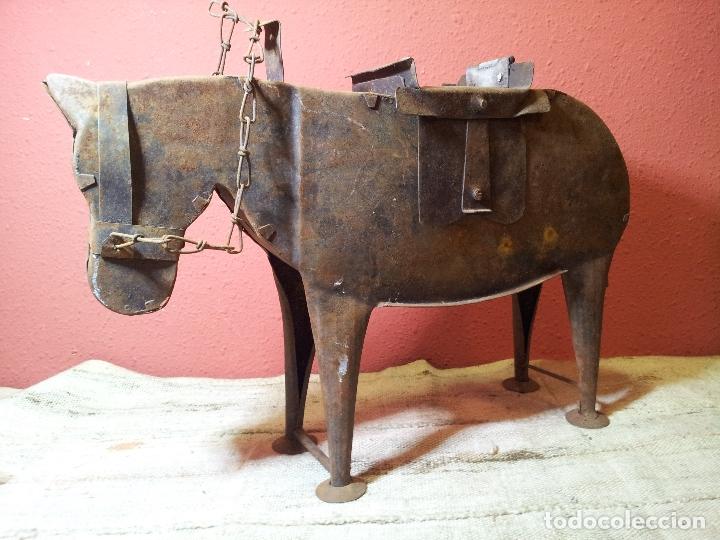
Puebla. The donkey of Troy of the Mexican Ultra-Right


Resultado de imagen para burro de troya


Puebla. The donkey of Troy of the Mexican Ultra-Right
By Diego Martín Velázquez Caballero


https://www.semanarioelreto.com/single-post/2018/10/16/Puebla-El-burro-de-Troya-de-la-Ultraderecha-Mexicana

The Puebla elections have shaken the interests and feelings of Mexican conservatism to the roots. If the morenovallismo loses the square, with its migration also move the privileges and spaces that they have usurped from, at least, five decades; although there is evidence of a greater hegemony. The "City of Angels" and its surroundings have been useful for the Catholic, Creole, technocratic, business and fascist reputation. If General Lázaro Cárdenas did not confront the local oligarchic structure, why would they allow MORENA to try to change the quasi-colonial hierarchy? The Mexican reaction will do anything to maintain its islets and haciendas.
The Neoavilacamachismo, headed by Rafael Moreno Valle, begins to show the weakness of López Obrador. The president-elect lacks political and economic strength to defeat a character who is successfully merging the Mexican reaction and the caciques of the Revolutionary Family. The Neoavilacamachismo will be for López Obrador what the Atlacomulco Group was for Ernesto Zedillo. Tragicomic repetition of what was the neoporphism for Francisco I. Madero? Will the president-elect review his allusive notes?
Puebla does not have the geostrategic importance of other Mexican states; however, symbolically, the defeat of Morena will be a great loss for the lopezobradorismo and, like Tabasco in the period zedillista, will be the starting point of the irreverence to the presidential figure and its movement. Andrés Manuel knows that story; but, he could also ask Manuel Bartlett the reasons of the Union of Governors in the fateful sexennium. The president-elect will face what is called a "juxtaposed government", that is, cohabitation with local governments of different political forces that are waiting to keep their fiefs. The legislative majority is of little use if the governors do not attend, understand, or want to understand.
The manner in which the electoral process of Puebla concludes, and not the NAICM, can be constituted as the sepulcher of the Fourth Transformation. An opportunist local right is convinced that AMLO won the presidency thanks to the system of proportional representation and, therefore, consider that the PAN must protect - even ignominy - its spurious triumph in the last state election. The neoavilacamachista cid is earning himself to be the new keeper of interests, custodial families and powers of the modern right, the secular right and the extreme right. As Gustavo Díaz Ordaz did.

Tuesday, October 09, 2018

The Mexican right in the twentieth century. Agony, transformation and survival. A Book Review


The Mexican right in the twentieth century. Agony, transformation and survival. A Book Review 

Dr. José Antonio Alonso Herrero y Dr. Jorge Vidal Urrutia
BUAP 

The Mexican right in the twentieth century. Agony, transformation and survival. Xóchitl Patricia Campos López and Diego Martín Velázquez Caballero (Coordinators): BUAP-PROFMEX-Montiel & Soriano Editores. 2017, 254 pp.
ISBN: 978-607-7512-77-6 and ISBN: 978-607-525-465-4

La derecha mexicana en el siglo XX. Agonía, transformación y supervivencia. Xóchitl Patricia Campos López y Diego Martín Velázquez Caballero (Coordinadores): BUAP-PROFMEX-Montiel & Soriano Editores. 2017, 254 pp. 
ISBN: 978-607-7512-77-6  y  ISBN: 978-607-525-465-4


1. Dr. José Antonio Alonso Herrero
Profesor Investigador del Instituto de Ciencias del Gobierno BUAP

This publication represents, in my opinion, one of the definitive advances to understand and interpret the current relationship between the Mexican political system and the Roman Catholic Church. Several articles analyze in depth and supported in a vast bibliography such crucial issues as the cult of Christ the King, the Cristiada, the assassination of the Jesuit Miguel Agustín Pro in the context of the main political-religious groupings in Mexico. In the third part highlights the chapter dedicated to the vicissitudes of Mexican fascism along with the Hispanic Heritage of Manuel Gómez Morín. Finally, Xóchitl Patricia Campos López and Diego Martín Velázquez Caballero -coordinators of the volume- analyze two topics of undeniable topicality: conservative feminism and the National Action Party, graphically described as THE CONSERVATIVE SMURF.
In the preface, it is rightly pointed out that in order to penetrate the tangled political jungle of Mexico, it is necessary to remember the great heterogeneity of the Mexican left, as well as the socio-political hedge of the right. The distinctive note are the articles included in the abundant and varied bibliography, on which the authors base their statements, and the clarity with which they present their varied theses. An essential article to understand the confusing current approach of the relations of the Mexican Government with the Holy See is the article by Elio Masferrer, in which he analyzes the control - not only religious - exercised by the Inquisition during the Colony. He then goes deeper into the analysis of the different historical periods: Independence, the 1930s and the contemporary Spanish political-religious situation. In order to understand "the strategic responses of the Catholic Church", as Elio Masferrer affirms, this author aptly quotes the funeral note published in memory of ex-Girolamo Prigione:

"Against what many think that Mexico gave everything and did not ask for anything, in
there really was not much to give or ask. However, Salinas
(the president) put a condition. That Miguel Hidalgo and José María
Morelos were redeemed from their excommunication. Girolamo Prigione, as
apostolic delegate, he proposed it to Pope John Paul II, who took it to
his canons, as his lawyers are called. The matter was studied and
They found a happy solution. Bishop Manuel Abad y Queipo was a
son had out of wedlock and that prevented him from being a bishop. A) Yes
that he only had the appointment of provisional bishop, but not definitive. Y
excommunication requires a definitive episcopal appointment. So,
therefore, Hidalgo and Morelos were never excommunicated and did not require
they would redeem. "


A second article also essential for the same purpose is the one dedicated to "The Faithful Spain", in which the concept of Hispanidad is analyzed as a generator of "authentic Hispanism". This admirable synthesis of "Mexicanness" and "Hispanicness" forged by Manuel Gómez Morín is crucial to understand the ideological development of the Mexican right. Fundamental factor, as the authors underline, to understand "the cultural and spiritual community between Spain and its colonies."
What would be the final evaluation that is imposed upon the conclusion of the reading of all the articles? A first evaluation is found in the preface written by Samuel Schmidt, James W. Wilkie and Edna Monzón Wilkie. We do not pretend to formulate a critical opinion of such lucid evaluations, but we do not hesitate to agree with these authors when they indicate that "this book is important because it allows us to study the origin and evolution of the political forces prevailing in Mexico."
It should be emphasized that the authors of the various chapters have described and deepened a political-religious theme in a creative and well-documented manner. This confirms the opinion of these three authors when affirming (ibid: 24) that "Patricia and Diego show us that there is not a single historical truth and that there is still much to be discovered and explained about the rights in Mexico".
Affirmation very understandable and acceptable. But, for our part, we allow ourselves to indicate that the accurate historical considerations directed towards the end towards "The Priista Smurf" (El Pitufo Priista) offer us, at the same time, an objective basis for deepening the "Vatican Smurf." They are two 'Smurfs' intimately connected for centuries. In Mexico we already have an abundant historical research on the relationships maintained for two centuries by these two politico-religious entities. It is time, to conclude, for the researchers to delve into the structural characteristics of the Vatican State capable of granting, preventing and reformulating apparently ecclesiastical distinctions, but which penetrate and configure the intimate historical structure of countries such as Mexico and Spain. 

2. Dr. Jorge Vidal Urrutia
Profesor Investigador de la Facultad de Derecho y Ciencias Sociales de la BUAP 
Research Professor of the Faculty of Law and Social Sciences of the BUAP
https://www.academia.edu/39891148/La_derecha_mexicana_en_el_siglo_XX_Agon%C3%ADa_transformaci%C3%B3n_y_supervivencia_2

After the National Action Party rise to presidential power in 2000, a style of political activism that has operated in Mexico for more than a century was unveiled. The work of Álvaro Delgado entitled "The Anvil. The far right in power" (2003), was a watershed to understand the reconfiguration that had different actors who managed to converge with traditionalism, conservatism, religiosity, etc., to give rise to what can be defined as the Mexican right.
The discussion in Mexico on the right is already decimonial, if we go back to the discussion of authors like Hale (1982) we will know that the political and ideological role of the representatives of the same have transcended since the 19th century, heirs of a Mexico that did not end to distinguish beyond conservative liberalism of the nineteenth century.
The Mexican Right in the twentieth century. Agony, transformation and survival (2017) comes to be subscribed in the discussion, which to this day is latent in national history, about groups of past and contemporary conservatism. The text recovers the memory - still alive - of many characters forgotten by history and ignored for being in the disagreement of the great men of the revolutionary period; nevertheless, they are real architects of the change and Mexican political transformation.
Divided into 4 parts the text takes us through a first discussion and approach to the concepts and categories of what is called symbolic representation with the contributions of compilers and national researchers Cesar Cansino and Elio Masferrer, important in this section to observe the Mexican ideological compass (Cancino, 2017: 44) to size and locate the range of topics on the Mexican right. In the second part, the cult of Christ the King in the moments of Mexican nationalism during the first half of the 20th century, as well as the religious themes linked to the peasant movements of that historical period of the nation; It gives an account of the formation of Mexican ultra-right groups and of characters still little known in history such as Miguel Agustín Pro. In the third part and as political alternatives of the Mexican right, we explain the set of fascist expressions of these social components of the right, like José Vasconcelos himself, led to sympathize with Nazism, the Hispanic heritage of Gómez Morin, as well as the description of the activism of discrete groups of the caliber of MURO, Yunque and Tecos, made by Gerardo Lozada and Hervey Rivera; in the fourth and final part the work leaves the slopes where the right can reconfigure itself in the present, through the phenomenon of Conservative Feminism headed by Margarita Zavala, and the role of the "Priista Smurf"; which reveals the power relationship that led the PAN to collaborate with the regime's party that was antagonistic since its creation in 1939.
The work coordinated by Xóchitl Patricia and Diego Martín, is a serious example of the symbolic reconfiguration and political praxis that the right wing had in Mexico during the 20th century, through a fine collaboration of academics. From the beginning the work highlights the interview with James W. Wilkie and Edna Monzón Wilkie, on the part of Samuel Schmidt to rescue through the thought of Manuel Gómez Morin the ideological bases that constituted the PAN.
The work of recovery and hermeneutic analysis of the work, the handling of documentary sources not widely disseminated in the national and regional scope, as well as the exploration of topics such as ultra-right groups and their involvement in alternative projects of the nation is the hallmark of originality of This product of academic research that also speaks of a dynamic and historical social inertias in many parts of contemporary Mexico, which are still awaiting new epistemological approaches with which to observe the transformation and survival of the Mexican right, the intensification of the authors was to gather different contributions to make a formal analysis that would lead us to think about the different types of conservatives and rights in our country.

Delgado, A. (2003). The anvil. The extreme right in power. Mexico: Plaza and Janés.
Hale, C. (1982). Mexican Liberalism in the time of Mora. Mexico. Ed. Siglo XXI